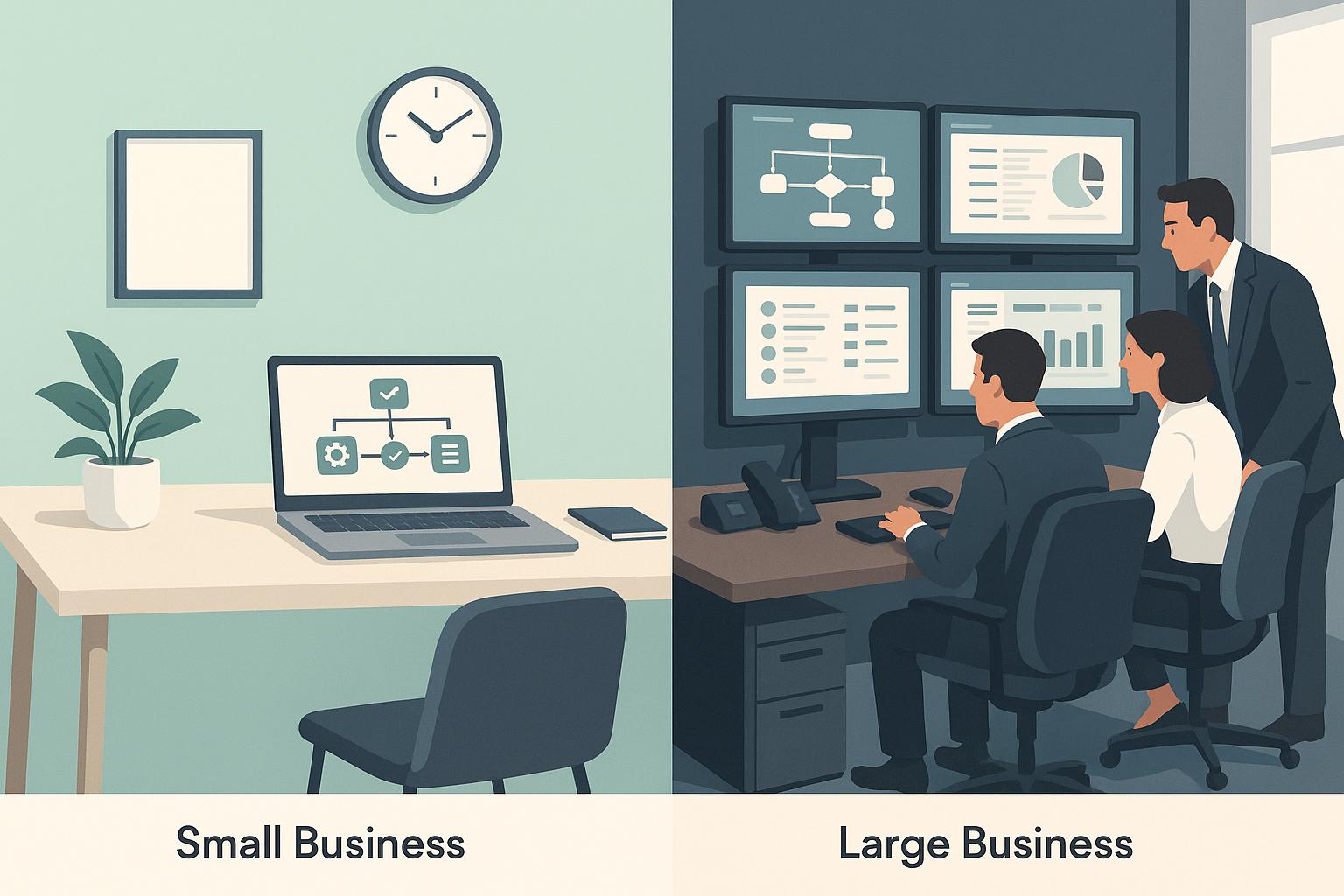
AI consulting is faster, cheaper, and scalable. Traditional consulting, while slower and pricier, excels in complex, high-stakes projects requiring human expertise. Businesses today face a choice: prioritize efficiency with AI or opt for personalized guidance with traditional methods.
Key Takeaways:
- AI delivers automated insights, reducing costs and timeframes.
- Traditional consulting offers deeper human analysis for complex challenges.
- Many companies combine both approaches for optimal results.
Quick Comparison:
| Factor | AI Solutions | Traditional Consulting |
|---|---|---|
| Speed | Fast automated processes | Slower due to manual analysis |
| Cost | Lower, predictable pricing | Higher, labor-intensive fees |
| Best For | Quick fixes, workflow analysis | Complex, nuanced strategic decisions |
| Availability | 24/7 | Limited to business hours |
| Customization | Standardized, data-driven insights | Highly tailored, human-led guidance |
AI works well for fast results and repetitive tasks. Traditional consulting is better suited for intricate situations requiring human judgment. A hybrid approach often combines the strengths of both.
Can AI Replace Strategy Consultants? (What Founders Need to Know)
How AI-Driven Business Optimization Works
AI-driven optimization uses automation to quickly gather and analyze data, offering a faster alternative to traditional methods that rely on manual, step-by-step processes. By processing large volumes of information simultaneously, AI systems reveal patterns and insights that might otherwise go unnoticed.
The process kicks off with automated data collection from various organizational sources. For instance, some AI tools can simultaneously conduct structured employee interviews, analyze workflows, and review process documentation. This streamlined approach eliminates scheduling delays and significantly reduces the time spent on manual data compilation. Below, we’ll explore pricing models, the benefits of automation, and a real-world case study that illustrates these advantages.
AI Solution Pricing Models
AI consulting solutions often use pricing models designed around automation and scalability. Since these systems minimize the need for manual analysis, they provide a more predictable cost structure compared to traditional consulting, where labor-intensive processes drive up fees.
These pricing models pair well with the time and resource savings that automation delivers.
Time and Resource Savings Through Automation
Automation addresses many of the bottlenecks found in conventional consulting. For example, automated workflow mapping allows organizations to assess processes much faster than manual methods. Real-time data processing immediately highlights inefficiencies. Additionally, AI systems operate 24/7, ensuring continuous analysis and faster decision-making.
By automating routine tasks like data collection and basic pattern recognition, AI frees up human experts to focus on strategic planning and implementation. These systems are also scalable, meaning they can handle increasing data volumes without adding extra costs.
Case Study: Privagent's Workflow Optimization Method
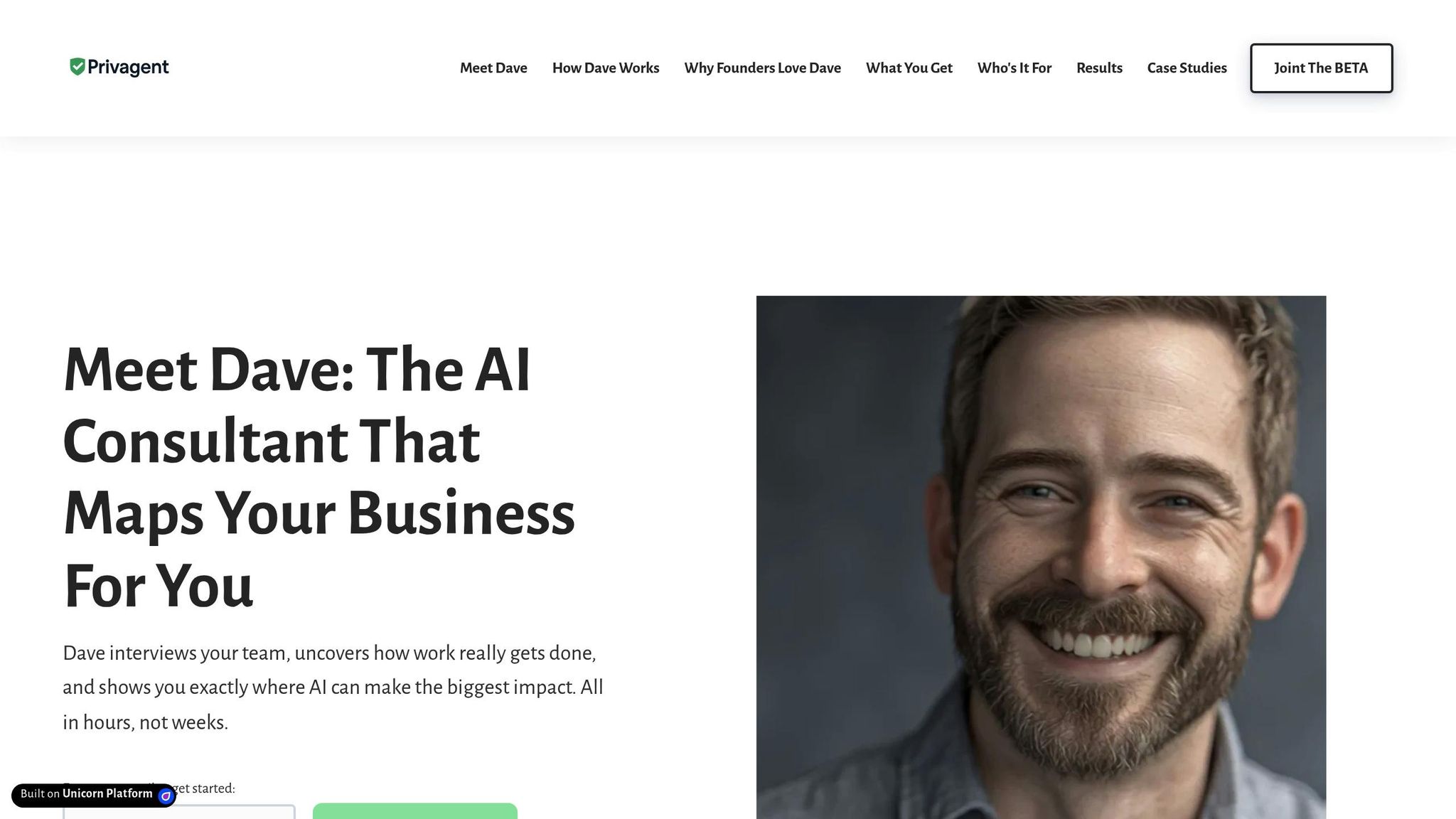
Privagent’s AI tool, Dave the AI Consultant, simplifies the process of gathering insights across departments, sidestepping common scheduling challenges.
Once the data is collected, Dave uses automated analytics alongside expert insights to identify inefficiencies and bottlenecks. The system generates visual reports with detailed process maps, clearly outlining areas for improvement. It also provides prioritized recommendations, helping organizations focus on actions that will yield the most impact.
Privagent also prioritizes security, ensuring all data is encrypted and handled confidentially throughout the analysis. Currently offered through a free beta program, Dave allows businesses to experience AI-driven consulting without requiring a large upfront investment.
How Traditional Consulting Services Work
Traditional consulting is rooted in human expertise and relies heavily on manual processes to deliver business solutions. As Galton AI explains:
Traditionally, consulting firms thrive on human expertise. The value lies primarily in the personal relationships built over time and the nuanced understanding of client needs that experienced consultants bring to the table.
At its core, this approach depends on skilled professionals who create customized strategies to address complex business challenges. Let’s dive into how these services typically operate and the hurdles they face.
Manual Processes and Time-Intensive Steps
The traditional consulting workflow often follows a step-by-step process. It starts with research, moves on to manual data collection through interviews and document reviews, and ends with in-depth analysis to craft strategic recommendations. While thorough, this sequential approach can stretch timelines, especially when delays arise due to scheduling conflicts or regulatory requirements.
Challenges in Traditional Consulting
While highly valuable in many ways, traditional consulting comes with its own set of issues. The reliance on human-driven processes often leads to bottlenecks, particularly when key consultants are unavailable or juggling multiple projects. Moreover, the quality of service can vary significantly based on the expertise and availability of individual consultants.
That said, traditional consulting remains indispensable for situations requiring deep strategic thinking and strong relationship-building. Research shows that 75% of consumers still prefer human interaction when tackling complex problems. This preference highlights the ongoing importance of personal connection, critical thinking, and empathy in business consulting. However, these limitations have also prompted some companies to explore AI-driven alternatives for quicker, more scalable insights.
sbb-itb-5ef22c3
AI vs Traditional Consulting: When to Use Each
Choosing between AI-driven solutions and traditional consulting isn't a one-size-fits-all decision - it depends on your business goals, challenges, and resource priorities.
Best Use Cases for AI Solutions
AI-powered tools like Privagent's Dave shine when speed and scalability are top priorities. If your business deals with repetitive tasks, massive datasets, or needs quick insights, AI can be a game-changer. These solutions are especially effective for mid-sized companies aiming to streamline operations without the long timelines often associated with traditional consulting.
AI is particularly strong in process optimization. It can identify workflow inefficiencies through automated employee interviews, pattern analysis, and instant report generation. For businesses with tight budgets, AI offers a cost-effective way to gain actionable insights without the scheduling delays that can come with human consultants. Plus, its standardized methods ensure consistent results across various business units.
Best Use Cases for Traditional Consulting
When it comes to tackling complex strategic decisions - like navigating regulatory hurdles, managing significant organizational changes, or addressing critical business shifts - traditional consulting is often the better choice. These scenarios demand deep contextual understanding and industry-specific expertise that experienced consultants bring to the table.
Traditional consulting is also invaluable in situations involving sensitive stakeholder management, high-stakes board presentations, or extensive client-facing work. The interpersonal skills and adaptability of seasoned consultants make a significant difference in these contexts.
Industries with strict regulatory requirements, such as healthcare, finance, or aerospace, often lean on traditional consulting for tailored advice and compliance expertise. And for change management initiatives, human consultants excel at guiding teams through uncertainty with emotional intelligence and persuasive communication.
Quick Comparison Guide
| Factor | AI Solutions | Traditional Consulting |
|---|---|---|
| Speed | Faster turnaround through automated processes | Longer engagement and planning cycles |
| Cost | Lower cost with efficient, scalable analysis | Higher fees with personalized service |
| Best For | Rapid analysis and process optimization | Complex strategic planning and change management |
| Availability | Often available 24/7 | Limited to standard business hours |
| Customization | Standardized approach with adaptable features | Highly customized and tailored |
| Relationship Building | Primarily data-driven interactions | Emphasis on personal, relationship-driven engagement |
The real key is aligning your specific needs with the right approach. For operational improvements and quick results, AI solutions like Privagent's Dave deliver clear benefits. On the other hand, for intricate challenges that require strategic depth and human nuance, traditional consulting is hard to beat.
Many businesses find success with a hybrid model - leveraging AI for initial analysis and operational enhancements, then bringing in human consultants for high-level strategy and implementation. This blend often strikes the perfect balance between cost efficiency and comprehensive problem-solving.
Next, we’ll dive into data-driven case studies that highlight the measurable savings from these approaches.
Actual Savings: Data and Case Studies
AI-powered consulting has reshaped how businesses achieve cost savings by delivering faster, automated insights. Many organizations report that AI-driven methods enable quicker identification and resolution of workflow inefficiencies compared to traditional approaches. Let’s examine how AI-driven and traditional consulting stack up in terms of actual cost savings.
Measured Savings with AI Consulting
AI consulting solutions are built for speed and efficiency, offering noticeable cost reductions. Automated tools analyze data far quicker than manual processes, enabling rapid assessments of operational workflows. For example, AI tools like Privagent’s Dave the AI Consultant provide actionable recommendations around the clock, ensuring businesses can make improvements without delay. Automated reporting also reduces errors, helping organizations transition to more efficient operations faster than ever.
Traditional Consulting Performance Data
Traditional consulting, while valuable, often involves slower processes due to its reliance on manual methods. Hourly fees, extended project timelines, and additional costs like travel and overhead can make it a pricier option. However, traditional consultants excel in delivering tailored, strategic insights that leverage human expertise. These nuanced solutions are ideal for addressing complex challenges but often require more time and resources before results are evident.
Comparative Summary
Directly comparing the two approaches can be tricky since project scopes and methodologies vary widely. However, the advantages of each are clear. AI consulting stands out for its speed and ability to deliver immediate returns on investment, making it a strong choice for workflow assessments and operational improvements. On the other hand, traditional consulting is better suited for intricate, high-stakes projects that demand in-depth human analysis and specialized industry knowledge.
Choosing the right approach depends on your business needs - whether you prioritize fast, cost-effective solutions or detailed, strategic guidance for complex challenges.
Conclusion: Picking the Right Method for Your Business
Choosing the best consulting method depends on your business needs, timeline, and budget. As we've explored, AI consulting offers quick, scalable insights, while traditional consulting provides the in-depth strategic expertise required for more complex challenges.
AI consulting is particularly effective for tasks like workflow assessments and process improvements. It can quickly pinpoint inefficiencies and highlight automation opportunities through continuous, automated reporting. On the other hand, traditional consulting shines when tackling complex strategic projects, regulatory hurdles, or high-stakes transformations that require a human touch and nuanced understanding.
Many businesses in the U.S. are adopting a blended approach to get the best of both worlds. They start with AI-driven analysis to achieve quick, actionable results and then bring in traditional consultants for more intricate strategic planning. A great example of this is Privagent’s Dave the AI Consultant, which automates interviews, workflow analysis, and visual reporting. Through its free beta program, businesses can address immediate inefficiencies while evaluating whether deeper, human-led strategies are needed.
Ultimately, the right method comes down to your specific situation. Use AI for fast, targeted fixes, and turn to traditional consulting for more complex, long-term strategic needs.
FAQs
How can businesses determine whether to use AI consulting or traditional consulting for their needs?
When weighing the choice between AI consulting and traditional consulting, it’s essential to assess your business’s unique needs, particularly in areas like scalability, cost, speed, and the level of customization required.
AI consulting excels in scenarios that demand automation, quick data processing, and the ability to scale operations efficiently. It can offer significant cost reductions and deliver insights at a much faster pace. Meanwhile, traditional consulting shines in situations requiring a tailored, hands-on approach, making it a better fit for tackling intricate, nuanced challenges that benefit from human expertise.
Key considerations include your business size, the complexity of the issue at hand, and how much weight you place on human interaction compared to automated efficiency. Matching these factors to your objectives will help you determine the approach that provides the greatest return on your investment.
How does the cost of AI-driven consulting compare to traditional consulting services?
AI-driven consulting offers a budget-friendly alternative by using automation and advanced algorithms to simplify processes. This approach cuts down on costs tied to manual labor and repetitive tasks, delivering savings in both time and money.
On the other hand, traditional consulting often comes with a heftier price tag. Factors like significant human involvement, travel expenses, and extended project timelines all contribute to higher costs. While each method has its benefits, AI-driven consulting shines in situations where efficiency and scalability take center stage, providing clear savings in operational expenses and resource use.
When is it most effective to combine AI with traditional consulting for business solutions?
A hybrid approach blending AI-powered tools with human consulting expertise proves highly effective when both technological precision and strategic insight are crucial. AI excels at managing repetitive tasks, processing massive datasets at speed, and delivering actionable insights. Meanwhile, consultants contribute strategic foresight, adaptability, and a nuanced understanding of intricate business challenges.
This partnership shines during critical phases like project planning, execution, and evaluation. AI simplifies workflows and enhances efficiency, while consultants concentrate on guiding high-level decisions. Together, this dynamic approach enables businesses to accelerate outcomes, manage costs wisely, and tackle unique challenges with precision.